Jesus Advent Arabesque Decorations: Graphics & Crafts
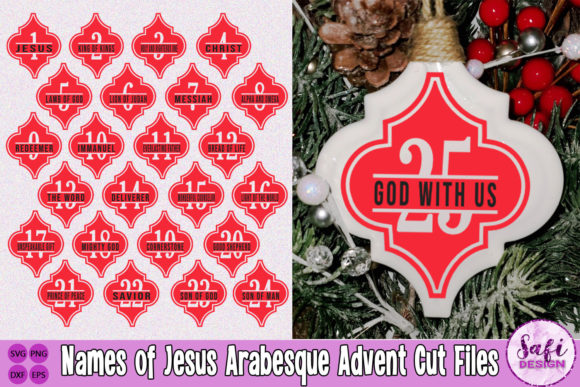
When I first opened the Jesus Advent Arabesque Decorations bundle, I was struck by how thoughtfully the visual language was constructed. As someone who designs blog graphics and editorial layouts for a living, I have learned that the best design assets are the ones that do two things at once: they communicate a clear message and they elevate the overall aesthetic of the page. This bundle does exactly that. It contains 25 individual cut files, each one built to fit the Lowes Arabesque style, and every file features a distinct name of Jesus used in the Bible. The concept is designed as a Christian Advent calendar, but as a publisher, I see a much wider range of uses. The decorative, almost ornamental quality of the arabesque shapes paired with the sacred typography creates a mood that feels reverent yet warm, traditional yet fresh enough for modern blog layouts. It leans into a lifestyle, seasonal, and artistic niche, with a clean and polished finish that avoids looking overly crafty or amateur. For a content website that needs to build trust with a faith-based audience, this asset signals care, intention, and respect for the subject matter.
Why This Design Asset Fits a Real Publishing Workflow
In my daily work as a digital publisher, I often search for graphic design assets that can serve multiple functions across a content site. The Jesus Advent Arabesque Decorations bundle is not a one-trick pony. Imagine you are a blogger preparing a series of Advent devotionals or a small business owner creating a downloadable Advent guide for your audience. You need featured images that stand out in a crowded feed, Pinterest pins that stop the scroll, and article headers that set the editorial tone. This bundle gives you a cohesive visual system. Each cut file works as a standalone accent, but when you display one each day, you create a visual narrative that keeps readers coming back. That kind of sequential storytelling is gold for content marketing and affiliate marketing, because it builds anticipation and encourages repeat visits to your site. The arabesque decorations add a layer of artistic detail that makes your graphics feel more like a publication than a personal blog, which directly supports reader trust and brand authority.
From Pinterest Pins to Lead Magnets: Real Use Cases
Let me walk you through how I would use this bundle in an actual content workflow. First, for Pinterest graphics, the arabesque shapes provide a strong frame that draws the eye to the center. I can place a Bible verse or a headline inside the cut file, and the decorative border does the heavy lifting for visual hierarchy. Second, for blog featured images, I would use one of the names of Jesus as the focal point, with a soft background and a clean sans serif font for the blog title. The contrast between the ornate arabesque and a modern typeface creates a compelling editorial design. Third, for newsletter headers, the cut files work beautifully as a repeating motif across the top of an email, giving the whole campaign a consistent brand identity. Fourth, for digital guides and lead magnets, I can incorporate the files as chapter dividers or section headers, adding a premium feel without needing a custom illustrator. Fifth, for social media posts, especially during the Advent season, these graphics perform well because they are visually distinct from the typical stock photo or flat-lay image. They feel like a digital product rather than a quick post, which signals quality to your audience. Sixth, for eBook covers and printable designs, the arabesque style lends itself beautifully to a classic, heirloom-quality look that works well for both digital downloads and print-on-demand products. Finally, if you are building a Canva template set for your audience, these cut files can be the signature element that makes your templates stand out on a creative marketplace.
How This Asset Boosts Content Performance
Every publisher I know is looking for an edge in click-through rates and reader engagement. The Jesus Advent Arabesque Decorations bundle supports better content performance in several measurable ways. The first is stronger first impression. When a reader lands on your site, the visual quality of your hero image or article thumbnail determines whether they stay or bounce. The arabesque decorations create an immediate sense of polish and professionalism. The second is clearer visual hierarchy. Because the cut files are designed with a central focal area, they naturally guide the eye to the most important text or image. That is a huge advantage when you are designing blog graphics that need to communicate a headline in under two seconds. The third is better click-through potential on social media and in email campaigns. A graphic that looks like a premium digital product or a printable design tends to get more clicks than a generic photo, especially in faith-based and lifestyle niches. The fourth is more consistent branding. When you use the same design asset across your website header, Pinterest pins, downloadable resources, and newsletter graphics, you create a visual identity that readers recognize and trust. The fifth is improved reader trust. A site that uses cohesive, well-designed graphics looks like a serious publication, not a hobby project. For affiliate marketers and small business owners who rely on credibility, that trust directly translates to conversions.
Where This Design Asset Works Best
Based on my testing, the Jesus Advent Arabesque Decorations bundle performs best in specific contexts. Use it for hero images on blog posts, where the decorative frame can anchor the entire page layout. It is excellent for article thumbnails in category archives or homepage grids, because the consistent shape creates a clean, recognizable pattern. For Pinterest pins, the vertical orientation of many cut files works naturally with the standard pin aspect ratio. It also shines in editorial accents such as pull quotes, sidebar elements, or section dividers within long-form content. For content upgrades and downloadable resources, the arabesque style adds a premium, gift-like quality that encourages email sign-ups. I also like it for category visuals on a blog navigation menu, where each category could feature a different name of Jesus as a subtle branding element. Newsletter headers and social media previews benefit from the same visual cohesion, especially during the Advent season when many publishers are creating themed content.
Where to Use This Asset with Care
No design asset is universal, and part of being a good publisher is knowing when to dial back. The Jesus Advent Arabesque Decorations bundle is ornate by nature, so it should be used carefully in small mobile thumbnails where the fine details may become muddy. If you are designing for a very small space, consider simplifying the graphic or using a single cut file as a subtle watermark rather than the main visual. Avoid placing it on text-heavy blog images where the decorative border competes with the headline. Give the design plenty of breathing room. It is also not ideal for low-contrast backgrounds in a light-on-light or dark-on-dark scenario, because the arabesque lines need contrast to read clearly. Busy layouts with multiple graphic elements can feel chaotic when you add an ornate frame, so use it as a hero accent rather than a repeating pattern. For serious professional niches like corporate law, finance, or medical content, the decorative style may feel out of place unless the brand identity is specifically faith-based or community-oriented. Similarly, websites that need a very minimal visual system may find that the arabesque style adds too much visual weight. In those cases, save this asset for seasonal campaigns or special content upgrades rather than everyday blog graphics.
Practical Publisher Notes for Real-World Use
Before you start dropping these cut files into your blog graphics, let me share a few technical observations from my own workflow. First, test it on desktop and mobile screens. The arabesque details are beautiful at full size, but on a phone screen, they can lose definition. I recommend previewing your graphic at 400 pixels wide to make sure the lines remain crisp. Second, check how it looks as a thumbnail in a grid layout or a category archive. The cut files need enough contrast with the background to remain recognizable at small sizes. Third, preview it inside a real blog layout with your actual headline text. Place the graphic beside a serif font, a sans serif font, a script font, a handwritten font, and a display font to see which combination creates the best visual hierarchy. In my tests, the arabesque style pairs well with a clean sans serif for the headline and a classic serif for body text, but it also works beautifully with a script font for a more devotional feel. Fourth, check contrast and readability when you overlay text directly on the cut file. The names of Jesus are already featured, so if you add additional text, make sure it does not compete with the existing typography. Fifth, try it in black and white to see how the design holds up without color. A grayscale version can be stunning for a minimalist editorial look, but it will also reveal any weak points in the line art. Sixth, review file size for web performance. If you are using these cut files in high-resolution printable designs, make sure you compress the images properly for web use. Large file sizes can slow down your page load speed, which hurts both user experience and SEO. Seventh, and most importantly, confirm commercial licensing before using this bundle on monetized websites, affiliate pages, or paid content products. The legal side of design assets is something every publisher should take seriously, especially when you are building a brand identity around a specific visual style.
Final Thoughts on This Graphic Design Asset
The Jesus Advent Arabesque Decorations bundle is more than a set of cut files. It is a ready-made visual system for any publisher, blogger, or small business owner who wants to create content that feels intentional, professional, and deeply resonant with a faith-based audience. The arabesque style brings a sense of ceremony and tradition, while the focus on the names of Jesus gives the entire bundle a devotional backbone that supports editorial content, digital guides, lead magnets, and social media visuals. Whether you are designing a website header, building a set of Canva templates for your audience, or creating a printable Advent calendar for your community, this asset gives you a foundation that is both beautiful and functional. The key is to use it with purpose, test it in real layouts, and let the design do the work of building trust and recognition with your readers. For a creative marketplace find, this one earns a solid place in any publisher's toolkit.