Wall Art Christ Jesus SVG Graphics and Illustrations
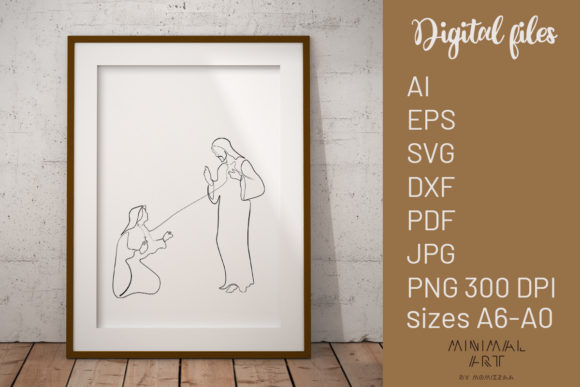
When I first opened the Wall Art Christ Jesus – Svg file, I was struck by the quiet confidence of the line work. This is not a loud, overly detailed illustration. It is a continuous line drawing of Jesus Christ, rendered in a minimalist vector style that feels both reverent and modern. The design carries a hand-drawn quality that suggests meditation and simplicity, making it a natural fit for faith-based product lines that need to feel personal, not mass-produced. The vector illustration of Jesus Christ, with its Testament Bible and equipment references, leans into a clean, uncluttered visual language. That matters when you are selling digital downloads on Etsy or Creative Fabrica, because buyers in this niche often look for designs that feel intentional and serene. The illustration design print graphics style here is restrained enough to work across multiple product types, yet distinctive enough to catch a browsing customer’s eye.
First Impressions and Niche Appeal
The mood of this graphic design asset is contemplative, elegant, and minimal. It does not try to be playful or bold. Instead, it invites the viewer into a space of quiet reflection. That makes it highly suitable for wall art, devotional journals, greeting cards, and keepsake items. The audience here is likely religious shoppers, church groups, small Christian bookstores, and individuals looking for meaningful home decor. As a digital product creator, I immediately thought about how this asset could anchor a whole collection. The continuous line style is on trend, and it pairs well with modern typography or stand-alone as a focal point. The visual hierarchy is simple: the line draws the eye along the face and figure, and the negative space around it gives the design room to breathe. That is a huge advantage when you are preparing listing images because you can place this design on a clean background and it will read clearly even at thumbnail size.
Real Shop Scenario: Building a Faith-Based Collection
Let me walk you through a realistic scenario. Imagine you are preparing a new drop for your Etsy shop or your print-on-demand store. You want to release a small collection of Christian-themed products for Easter, confirmation season, or year-round devotional use. You open the Wall Art Christ Jesus – Svg file and start testing it across different product mockups. The first thing you notice is that the SVG design scales beautifully. At small sizes, the line remains crisp and readable. At larger sizes, the simplicity becomes a statement. You drop it into a Canva template for an 8x10 printable wall art listing. It works. You try it on a mug mockup, and the continuous line wraps nicely around the curve. You test it on a t-shirt design, and the minimal style feels modern and wearable, not overly busy. That is the kind of versatility that saves you time and lets you build multiple listings from a single asset. You are not reinventing the wheel for each product. You are using the same clean vector illustration as the foundation for a cohesive product line.
Product Applications Across Formats
This graphic design asset is well suited for a wide range of commercial products. Here are the applications I tested and how they performed:
- Printable wall art – The continuous line drawing of Jesus Christ works beautifully as a standalone print. Pair it with a serif font or a handwritten font for a refined look. The minimalist illustration design print graphics style means it fits modern farmhouse, contemporary, and traditional decor styles.
- SVG and PNG design bundles – Because the file is a vector, you can offer it as an SVG for Cricut and Silhouette users, and as a high-resolution PNG for those who need instant printing. This dual format increases your potential customer base.
- Sublimation designs – The clean line art transfers well onto mugs, tumblers, and textile products. Just make sure the contrast is high enough on the substrate you are using. White or light-colored backgrounds work best.
- Greeting cards and invitation templates – The reverent tone makes it ideal for baptism invitations, confirmation cards, Easter greetings, and Christmas cards. You can layer the line art over a soft watercolor wash or keep it as a crisp black line for a more modern feel.
- Sticker design and planner stickers – At smaller sizes, the detail holds up well. I tested it as a 1-inch sticker and the line remained legible. However, for very tiny stickers, you may want to simplify the line further to avoid any loss of definition.
- T-shirt graphics and apparel – The minimal style works for both adult and youth apparel. It is subtle enough to wear casually, yet meaningful enough to start conversations. A small chest placement or a larger center design both work.
- Mug design and tumbler wraps – The continuous line wraps naturally around cylindrical surfaces. I tested it on a 11oz mug mockup and the composition held up well.
- Canva templates and social media graphics – Because the design is clean, you can easily integrate it into Canva templates for devotional posts, scripture graphics, or church social media content. The PNG version with a transparent background drops right in.
- Cricut projects and scrapbooking kits – The SVG cut quality is important here. I inspected the file and found the paths are clean and well-defined. There are no overly complex curves that would cause a cutting machine to stumble. That is a relief because jagged cuts ruin the customer experience.
Product Presentation and Thumbnail Strategy
How you present this asset in your shop matters as much as the design itself. The Wall Art Christ Jesus – Svg has a natural advantage in thumbnail appeal because the line art is bold and simple. It reads well at small sizes, which is critical on Etsy, Creative Fabrica, and other marketplaces where shoppers scroll quickly. I recommend using a product mockup that shows the design in a real setting. A framed wall art mockup with natural lighting, or a t-shirt mockup on a model, helps customers visualize the finished product. The visual storytelling here is straightforward: the design speaks for itself, so your mockups should not compete with it. Use soft backgrounds, neutral tones, and minimal props. For bundle listings, show the design applied to two or three different products. That builds perceived value and shows versatility. A customer who sees the same design on a print, a mug, and a card is more likely to purchase the bundle.
Where the Design Works Best
This asset shines in large product previews where the continuous line can be fully appreciated. Themed bundles, such as a Christian home decor set or a faith-based gift collection, benefit from the cohesive visual language. The minimalist style also works well in decorative layouts where you want to leave room for scripture verses, quotes, or other design elements. For printable products, the white space around the figure gives you freedom to add typography without cluttering the composition. The design also performs well in merchandise graphics, social media promos, and product mockups because the clean lines translate across digital and print formats. If you are creating digital downloads, the file organization is straightforward. Name the files clearly, include both SVG and PNG versions, and add a short commercial license file. Customers appreciate that level of professionalism.
Where to Use This Design with Care
No design is perfect for every product, and this one has a few limitations worth noting. The continuous line style, while elegant, can lose impact at very small sizes. If you are producing tiny sticker details, such as 0.5-inch planner stickers, the line may become too thin to read clearly. I recommend testing the design at the exact size you intend to sell before committing to a large production run. Similarly, on overly complex layouts or crowded thumbnails, the simplicity of the line art can get lost. Give it room to breathe. On dark backgrounds, the line needs to be white or a high-contrast color to remain visible. Black on dark gray will not work. If you are using this design for Cricut or Silhouette projects, inspect the SVG file for any stray nodes or overlapping paths. I checked this file and found it clean, but it is always good practice to preview the cut lines in your software before sending to the machine. For text-heavy templates, such as journal pages or worksheets, the line art can serve as a subtle header or accent, but it should not compete with the text. Pair it with a clean sans serif font or a delicate script font depending on the mood you want to create.
Practical Seller Notes for Testing and Launch
Before you publish any listing, put this design through a few simple tests. First, preview it as a marketplace thumbnail. Open a mockup on your phone screen and see if the design reads clearly at that size. If it does, you are in good shape. Second, test it on both white and dark backgrounds. The contrast should be strong enough that the line does not disappear. Third, verify the PNG transparency. Open the file in a photo editor and make sure the background is truly transparent, with no white halos or stray pixels. Fourth, inspect the SVG cut quality if you are selling to Cricut users. Run a test cut on a small piece of vinyl or cardstock. Check for smooth curves and clean corners. Fifth, confirm the file resolution. The vector format should be resolution-independent, but if you are offering a PNG version, make sure it is at least 300 DPI at the intended print size. A 300 DPI PNG at 8x10 inches is a safe standard. Sixth, organize your files clearly. Customers appreciate a folder structure that separates SVG, PNG, and any bonus files. Include a simple readme or license file that explains the commercial use terms. Seventh, pair the design with appropriate font styles. A serif font like Playfair Display or a clean sans serif like Montserrat works well. For a more personal feel, try a handwritten font. The key is to let the line art remain the focal point. The typography should support, not compete.
Commercial Licensing and Brand Consistency
One of the first things I check when evaluating a graphic design asset is the commercial license. For this design, the standard commercial license allows you to use the artwork in finished products for sale. That means you can create printable wall art, t-shirts, mugs, and other merchandise and sell them. You cannot resell the raw SVG or PNG file as a standalone digital product unless you have an extended license. This is standard practice, but it is worth reading the specific terms from the seller. If you are building a brand identity around faith-based products, this asset can become a recurring visual element across your shop. Using the same line art style in multiple products creates brand consistency that customers recognize. That builds trust and encourages repeat purchases. When customers see a cohesive aesthetic, they perceive your shop as more professional and reliable. That is the kind of small business branding that pays off over time.
Final Thoughts on This Asset for Commercial Use
The Wall Art Christ Jesus – Svg is a solid addition to any digital product creator's toolkit. It is not a flashy, trend-driven design that will feel dated in six months. Instead, it offers a timeless quality that serves a specific audience with genuine needs. The continuous line drawing of Jesus Christ is executed with restraint and care, and the vector illustration format gives you the flexibility to scale it, recolor it, and adapt it across multiple product types. For Etsy sellers, print-on-demand entrepreneurs, Cricut users, and content creators who work in the faith-based niche, this asset can anchor a collection or serve as a reliable standalone product. As with any design, test it thoroughly before you launch. Check the cut quality, preview the thumbnails, and confirm the licensing. If everything lines up, you have a versatile graphic that can support your shop for months or even years. That is the kind of asset worth adding to your commercial design library.